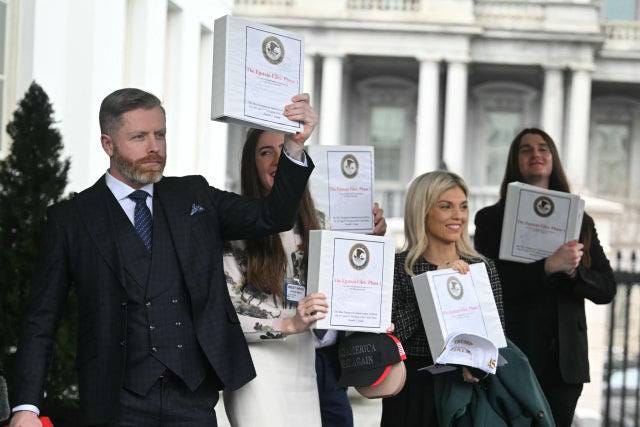
The Epstein Transparency Act is a direct response to the failures uncovered in the handling of the Jeffrey Epstein case—failures defined by secrecy, hidden agreements, and a justice system that operated behind a curtain. At its core, the Act is designed to prevent federal prosecutors from cutting secret deals, concealing decisions, and excluding victims from the process. It aims to make sure nothing resembling the 2007 Epstein non-prosecution agreement can ever happen again.
The Act focuses on transparency in four critical areas. First, it requires that any federal non-prosecution agreement be made public, eliminating the possibility of quiet immunity deals negotiated out of sight. Second, it strengthens the rights of victims by mandating that they be notified before prosecutors finalize any plea deal or agreement—restoring the role of victims as participants rather than afterthoughts. Third, it forces federal prosecutors to clearly document why they chose not to bring charges, creating a record that can be examined by courts, Congress, and the public. And finally, it dramatically narrows the rules allowing documents to be sealed, preventing the kind of blanket secrecy that allowed powerful individuals tied to Epstein to avoid scrutiny.
In short, the Epstein Transparency Act isn’t just about correcting a single case—it’s about rebuilding trust in the federal justice system. By pulling back the curtains on prosecutorial discretion and making federal agreements visible to the public, the Act seeks to close the loopholes that shield the privileged and silence the vulnerable. It represents a rare bipartisan recognition that sunlight is not optional in a democracy—it’s the only safeguard that prevents justice from becoming negotiable
.
For years, the public conversation surrounding Jeffrey Epstein, migration networks, and government transparency has been dominated by outrage, partisan theater, and selective disclosure. Yet beneath the surface lies a deeper and far more uncomfortable story — one that spans administrations, crosses party lines, and reveals structural vulnerabilities that have persisted for decades.
If this nation ever expects real accountability, the entire network must be exposed from its origins — not merely the pieces convenient for political attacks.
Buckle up. This article begins a multi-part series that examines what happens when long-protected systems are finally forced into the light.
WHAT AMERICANS CAN EXPECT FROM THE EPSTEIN TRANSPARENCY ACT
Now that we understand what the Act compels the Department of Justice to disclose, the next question is simple:
What does this actually mean for the American public?
Not in theory. In practical, real-world terms — once DOJ is legally required to unseal two decades of investigative material previously shielded by:
Non-Disclosure Agreements
sealed civil settlements
protective orders
grand jury restrictions
reputational redactions
U.S. Virgin Islands political interference
and internal institutional self-protection
This is not a normal disclosure. This is a structural disclosure, touching federal systems that intersect with:
intelligence-adjacent networks
foreign political actors
financial institutions
philanthropic infrastructures
USAID and NGO grant ecosystems
ORR child-placement failures
and the broader nonprofit industrial complex
Once the records are forced into daylight, several predictable impacts follow.
1. A Federal Document Flood Unlike Anything Americans Have Seen
The Act mandates the release of:
FBI 302s and 1A evidence records
DOJ declination and justification memos
internal agency communications
correspondence with foreign governments
previously redacted names
investigative and prosecutorial timelines
communications between SDNY, DOJ Main, USVI, HHS, and Treasury
financial-referral records between federal agencies[³]
This alone fractures nearly twenty years of secrecy surrounding prosecutorial decisions, investigative delays, and interagency conflicts.
The public will immediately see where Epstein’s case overlaps with broader federal failures — including patterns consistent with ORR’s migrant-child losses, USAID contractor abuses, NGO oversight breakdowns, and HHS system vulnerabilities.
2. A Reassessment of Institutional Behavior — Not Just Epstein’s Circle
The release is not merely about identifying individuals. It is about exposing how federal systems behaved, failed, or abdicated responsibility.
Expect disclosure of:
interagency turf battles and conflicting jurisdiction claims
contradictory internal assessments
dropped or downgraded leads due to foreign-political sensitivities
broken handoffs between DOJ, Treasury, HHS, and State Department
These weaknesses are identical to those that appear in:
ORR’s 85,000 “lost contact” minors
USAID’s oversight failures overseas
NGO cross-pollination with intelligence-adjacent personnel
state-level CPS failures
unvetted sponsor-placement pipelines[⁵]
Epstein is not the entire system — but his case exposes how the system operates under pressure
.
3. The Public Identification of Networks — Not Just Individuals
The Act does not assign guilt. But it removes the redactions that long protected:
philanthropic foundations
academic institutions
surveillance-tech partnerships
security contractors
NGO boards and intermediaries
USAID-affiliated organizations
foreign-government liaisons
political influencers
financial facilitators
This is where the narrative fundamentally shifts:
Transparency is not accusation. Transparency ends the ambiguity that institutions relied on.
Once financial flows, emails, schedules, referrals, and foreign-contact logs become visible, the public can map the network rather than relying on speculation.
This mapping lays the groundwork for future reporting on:
NGOs
CPS subcontractors
foster-care placement networks
ORR federal contractors
USAID grant recipients
All of which exhibit the same system weaknesses revealed through the Epstein case.
4. A Wave of Litigation, Hearings, and Organizational Exposure
This isn’t political theater anymore. It is a forced accountability cycle.
Once the Act releases the documents, Americans should expect:
new lawsuits from victims whose cases were previously sealed
challenges to prior USVI settlement agreements
renewed congressional oversight of DOJ and Treasury
pressure on JPMorgan, Deutsche Bank, Bank of America, and BNY Mellon
forensic audits of NGOs and philanthropic intermediaries tied to Epstein
scrutiny of surveillance-technology partnerships with foreign ties
exposure of crossover between intelligence-linked NGOs and federal agencies
And critically:
Organizations — not just individuals — become legally vulnerable.
This includes NGOs, USAID contractors, ORR subcontractors, philanthropic foundations, and international partners. Unsealed records will reveal:
whether they received Epstein-connected grants or donations
whether their personnel appear in unredacted communications
whether their funding pipelines intersected with foreign influence channels
whether they benefited from systemic oversight failures
Epstein becomes the case study. NGO oversight becomes the next battlefield.
Once Congress and the public recognize how one network avoided scrutiny, attention will turn to other networks built on the same structural weaknesses.
5. The End of Rumor-Based Understanding — And the Start of Evidence-Based History
For decades, the Epstein case existed in two parallel worlds:
official silence
public speculation
This Act collapses the distance between them.
When foreign leak caches, journalistic investigations, and official U.S. government records finally collide, Americans will see:
myths dissolve
protective narratives fail
timelines stabilize
networks become clear
institutional behavior becomes explainable
The Act does not just clarify Epstein. It clarifies how federal systems respond to money, influence, and vulnerability.
6. Exposure of Systemic Weaknesses Across Independent Federal and Nonprofit Domains
The final impact is the most far-reaching.
The Act will reveal:
how investigations stalled due to interagency dysfunction
how financial oversight collapsed at both the bank and regulatory levels
how political considerations shaped prosecutorial outcomes
how multiple administrations ignored warnings
how intelligence-adjacent actors complicated standard investigative channels
how vulnerable-population systems failed (victims, migrants, foster youth)
These same categories of failure appear in:
ORR’s missing children
USAID’s oversight gaps
NGO mismanagement and self-policing
CPS subcontractor failures
trafficking networks exploiting system blind spots
This is the core thesis:
Epstein is not an isolated failure — he is the blueprint that exposes how American institutions break under the same pressures: money, influence, international networks, and vulnerable populations
.
**BOTTOM LINE:
Transparency Will Lead to Prosecution, Structural Reform, and Exposure of Interconnected Systems**
The Transparency Act is not the end. It is the beginning.
It will expose:
Epstein’s operational environment
the institutions that protected themselves
the networks that thrived in secrecy
the foreign influence channels intertwined with philanthropy
the systemic failures that allowed exploitation to continue
the nonprofit, NGO, and contractor networks operating under similar vulnerabilities
Once these patterns become public, Americans will demand scrutiny of every system that shares the same structural flaws.
This series will examine those systems — one by one.
Conclusion: What’s Narrative, What’s Fact — and What They Tried to Hide
For more than a decade, the public conversation around Jeffrey Epstein has been shaped, twisted, and weaponized by both Republicans and Democrats. Each faction cherry-picked whatever detail best served its narrative—usually to attack the other side, distract the public, or bury threads that led too close to their own donors, their own institutions, and their own interests.
That political tug-of-war kept everyone staring at the surface: flight logs, celebrity photos, endless speculation about who did or didn’t visit an island. Meanwhile, the far more consequential story sat in plain sight but unexamined: Epstein’s deep involvement in financial institutions, foreign influence operations, elite tech circles, and intelligence-adjacent networks that spanned the United States, Israel, Russia, Mongolia, West Africa, and more.
Here’s the part the political class never wanted you to focus on:
Epstein wasn’t just collecting social capital — he was brokering deals, moving money, facilitating government-to-government introductions, and sitting at the center of a surveillance-industry pipeline tied to Unit 8200 talent and global security exports.
He wasn’t simply “a wealthy creep with a plane” — the reporting on the Barak email leaks shows he had consistent access to senior political figures, intelligence-linked aides, and billionaires who shape the modern data-surveillance landscape.
His properties weren’t just locations of abuse — they functioned as networking hubs for people with real state-level power, including individuals with defense and intelligence portfolios.
But here’s the balance we must maintain:
Some of the more extreme rumors — the internet favorites, the sensationalized versions — may never be proven, and some are likely wrong. There is still no verified public evidence that Epstein was a formal Mossad operative, or that he was running state-directed espionage or blackmail missions for any specific intelligence service.
And yet the verified material is, in many ways, worse:
Documented financial pipelines between Epstein and high-level foreign political actors
Evidence-backed involvement in surveillance-tech firms used by governments
Communications showing attempted diplomatic backchannels involving Israel, Russia, and Syria
Epstein-funded deals and political strategies that reached far beyond anything the public imagined
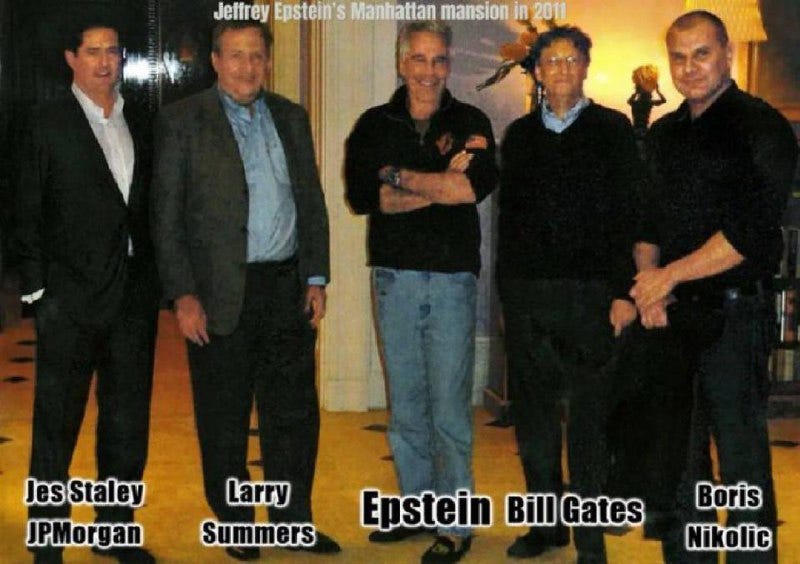
Israeli intelligence-linked personnel staying in his Manhattan home for extended periods
Security agreements—like Israel–Mongolia—brokered or facilitated through Epstein’s network
These aren’t theories. These are facts drawn from reporting on leaked communications, financial disclosures, and multiple independent investigations.
And because this ecosystem implicates financiers, tech leaders, foreign governments, and intelligence-adjacent industries, the political establishment had every incentive to keep the public distracted with partisan noise. As long as you argue about which politician was on which plane, you’re not looking at the infrastructure that actually mattered — the network where power circulates, where policy is influenced, and where global surveillance deals are brokered.
What’s coming next — as more documents, communications, and financial trails are exposed — won’t be the cartoonish conspiracies the internet loves. It will be more structural, more systemic, and far more alarming:
A picture of how elites really operate across borders; how intelligence, money, and political influence blend into one ecosystem; and how Epstein wasn’t an outlier at all — he was a symptom of a much larger machine.
Some rumors may fade. But the truth that replaces them will be heavier than anything the public has been prepared for.
Call to Action: Stand With Us. Protect Children. Change the System.
Project Milk Carton is a federally recognized 501(c)(3) organization dedicated to exposing systemic failures, rescuing at-risk children, and educating the public on how to reform a child-protection system that too often protects institutions instead of families.
We don’t answer to corporations. We don’t take money from political actors. We survive because people like you believe that the truth is worth fighting for.
If you want to help us keep producing uncompromising watchdog journalism, expanding our intelligence systems, and supporting families in crisis, we need you in this movement.
And because we are a 501(c)(3), every contribution is fully tax-deductible.
These final weeks of the year are your last chance to make a 2025 gift that immediately fuels our work saving children in 2026.
It takes 30 seconds. It changes lives. It keeps the lights on for the only team willing to confront this system head-on.
Become a 2025 Mission Partner today. Your donation protects children, strengthens our investigations, and helps transform a broken system.
👉 Make a Tax-Deductible Gift to Project Milk Carton Now
You can contribute by becoming a paid subscriber now:



Many shifts in current functioning to get this legislation passed.
Here’s what’s happening in Winchester, Virginia, right now.
https://logansharpknife1.substack.com/p/30000-epstein-pages-in-three-minutes