

By Project Milk Carton | The Constitutional Republic
In Part 1 of this investigation, we followed the money.
We examined the organizations, the nonprofit networks, the billion-dollar funding systems, and the influence pipelines connected to Social-Emotional Learning programs across America.
But now we arrive at the most important question in this entire investigation:
Was the connection between Social-Emotional Learning and the Southern Poverty Law Center accidental?
Or was it intentional?
Because if it was intentional, then parents across America were never simply buying “kindness lessons” or “anti-bullying programs.”
They were buying into a much larger ideological framework that had already been carefully mapped out behind the scenes.
And according to the documents uncovered in this investigation, the answer is now very clear.
The alignment was intentional.
Not hidden.
Not leaked.
Not discovered through whistleblowers.
Published openly by the organizations themselves.
That is why this document matters so much.
Because it changes the entire conversation.
The Most Important Document in This Investigation
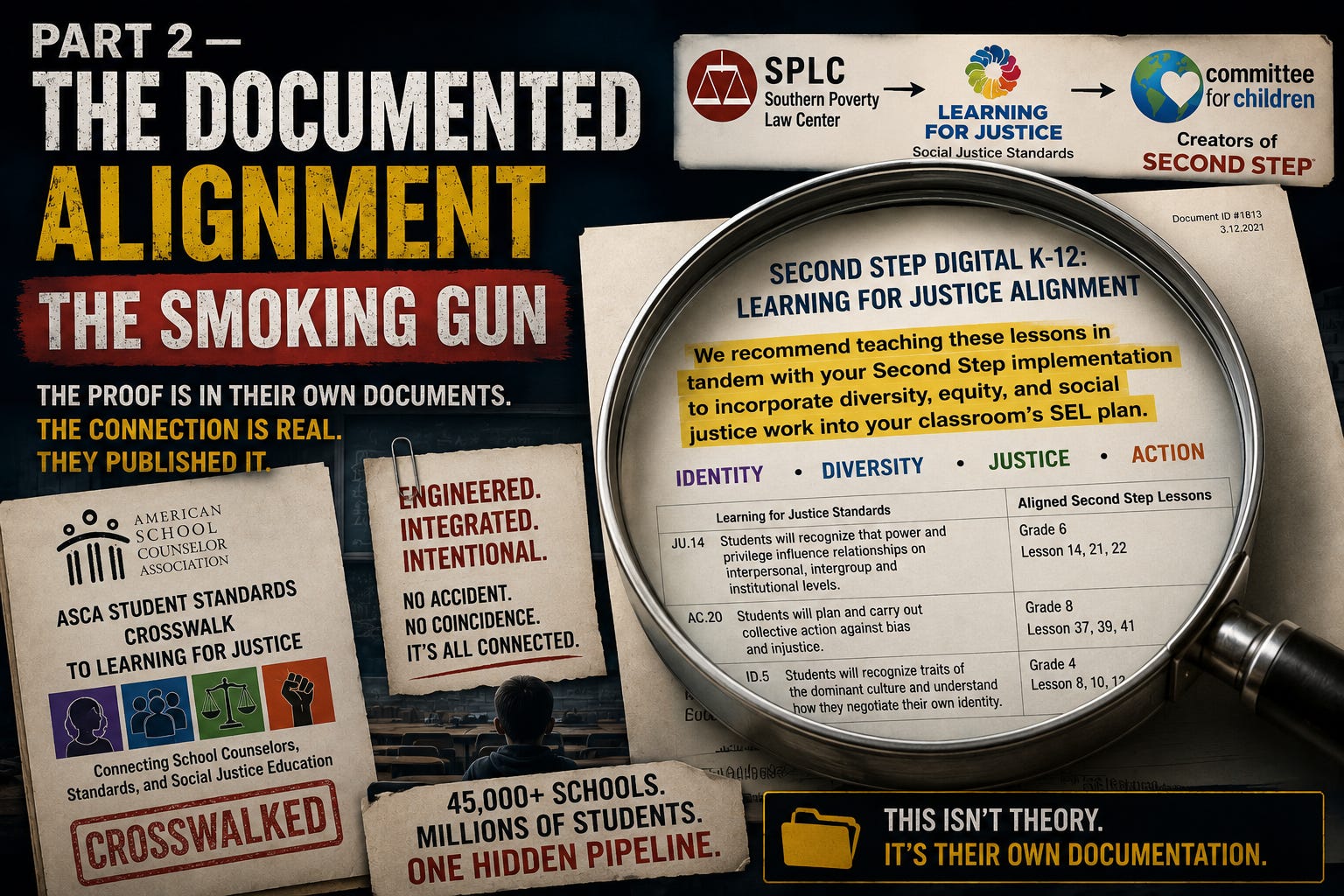
The single most important document uncovered in this investigation was published in 2021 by the Committee for Children — the organization behind the Second Step curriculum.
The document was titled:
“Second Step Digital K-12: Learning for Justice Alignment.”
At first glance, that title may not sound important.
But what this document actually reveals is massive.
Why?
Because Second Step is one of the largest Social-Emotional Learning programs in America.
According to the research:
Second Step operates in more than 45,000 schools
Reaches roughly 26.9 million children every year
Holds CASEL’s highest “SELect” endorsement rating
This is not a small curriculum company.
This is one of the dominant SEL systems in the country.
And the alignment document explicitly maps Second Step lessons directly to the Southern Poverty Law Center’s “Learning for Justice” standards.
That means:
The connection was documented
The relationship was intentional
And teachers were instructed to use them together
That is the smoking gun
.
What the Document Actually Says
This is where things become extremely important.
The alignment document includes the following statement from the Committee for Children itself:
“Learning for Justice has designed a robust set of lessons with direct instruction on identity, diversity, justice, and action that complement and enhance social-emotional skills.”
Then the document continues:
“Committee for Children has curated a set of Learning for Justice lessons aligned to the Second Step Elementary digital program and Second Step Middle School.”
And finally, the key sentence:
“We recommend teaching these lessons in tandem with your Second Step implementation to incorporate diversity, equity, and social justice work into your classroom’s SEL plan.”
Read that carefully.
This was not random overlap.
This was not two organizations accidentally teaching similar ideas.
This was direct coordination.
The Committee for Children was openly telling educators to combine:
SEL
Diversity Equity Inclusion (DEI)
Social justice frameworks
And SPLC Learning for Justice content
Into one integrated classroom system.
That changes everything.
Because for years, parents were told SEL was mostly about:
kindness
empathy
emotional awareness
and anti-bullying
But the alignment document reveals the framework was much broader.
And much more ideological.
Who Is the Committee for Children?
To understand why this matters, we first need to understand who the Committee for Children actually is.
The Committee for Children is a Seattle-based nonprofit organization founded in 1975.
Its main product is the Second Step curriculum.
And financially, this organization is enormous.
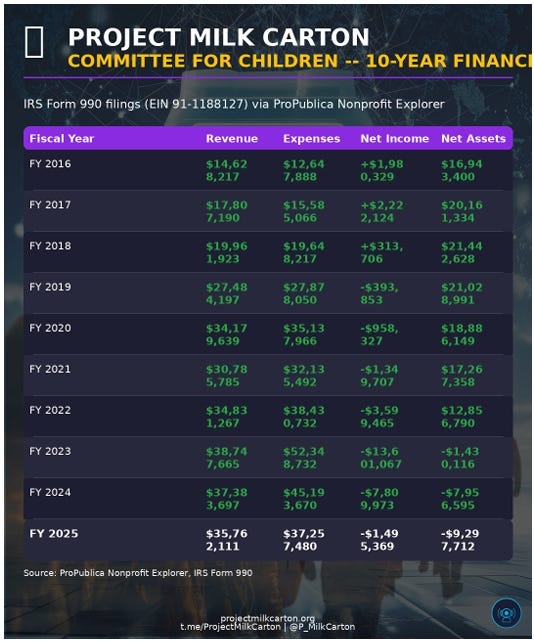
According to IRS filings reviewed in the report:
Revenue grew from $14.6 million in 2016 to $38.7 million in 2023
98.3% of revenue comes from curriculum sales to school districts
The organization reaches tens of millions of children annually
The research also notes that despite nonprofit status, the organization operates largely like a commercial curriculum business selling products directly into schools.
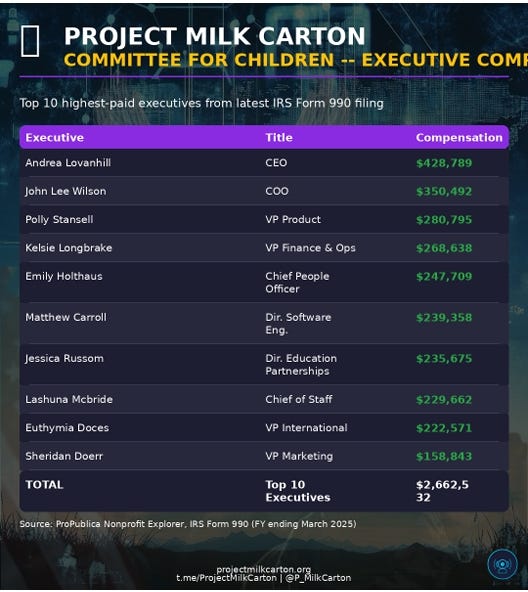
Executive salaries were also substantial.
The CEO reportedly earned over $428,000 annually.
This matters because it shows the SEL market is not small.
It is a multibillion-dollar industry.
And where there is money, there is influence
.
The Four Domains
At the center of the Learning for Justice framework are four major domains:
Identity
Diversity
Justice
Action
On the surface, some of these ideas sound harmless.
But critics argue the language becomes increasingly political and ideological as students move deeper into the framework.
Let’s examine each one carefully
.
Identity
The Identity domain focuses on group membership and social identity.
One standard states:
“Students will develop positive social identities based on membership in multiple groups.”
Another requires students to:
“Recognize traits of the dominant culture.”
Critics argue this framework teaches children to primarily view themselves through group identities rather than individual identity.
Supporters argue it helps students understand diversity and inclusion.
But the important point is this:
This is not simply emotional regulation training anymore.
This is worldview formation.
And it was integrated directly into SEL systems.
Diversity
The Diversity domain goes beyond simply respecting differences.
One standard requires students to:
“Examine diversity in social, cultural, political and historical contexts.”
Again, supporters view this as educational awareness.
Critics argue it introduces sociopolitical analysis into elementary and middle school emotional learning frameworks.
The debate itself is not the main issue here.
The transparency issue is.
Were parents fully informed these ideological frameworks were tied directly to SEL programs?
That is the core question.
Justice — The Core Ideological Shift
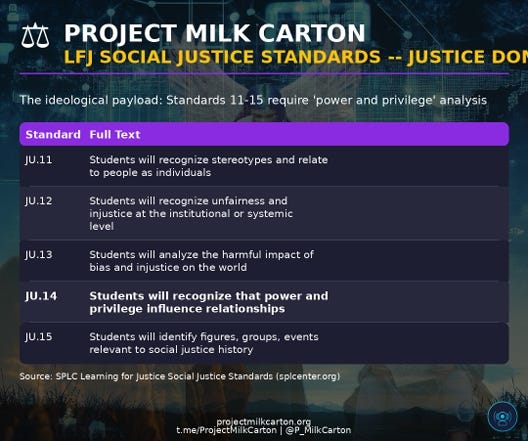
Then we arrive at the “Justice” domain.
This is where the framework becomes significantly more political.
One standard states:
“Students will recognize unfairness and injustice at the institutional or systemic level.”
Another states:
“Students will recognize that power and privilege influence relationships on interpersonal, intergroup and institutional levels.”
This language is important because it mirrors concepts commonly associated with Critical Race Theory and systemic power analysis frameworks.
Now to be clear:
supporters argue these lessons help students recognize inequality and social injustice.
Critics argue these frameworks teach children to interpret society primarily through oppression structures and power hierarchies.
Regardless of political opinion, the larger issue remains:
these concepts were formally integrated into SEL curriculum structures used in thousands of schools.
And most parents were never told.
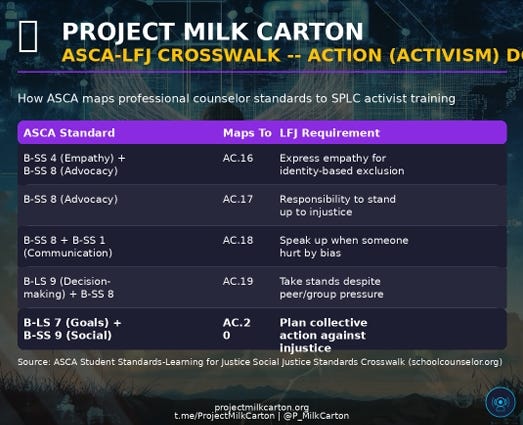
Action — The Activism Component
Then comes the final domain:
Action.
This is the section that alarmed many parents and researchers the most.
One standard states:
“Students will plan and carry out collective action against bias and injustice.”
Another says students should:
“Take a stand against bias despite negative peer pressure.”
Critics argue this moves beyond education and into activist training.
Supporters argue it encourages civic engagement and standing up against injustice.
Again, the issue is not merely political disagreement.
The issue is transparency.
Because most parents were never told that “Social-Emotional Learning” programs could include activist-oriented frameworks aligned with SPLC standards.
That information was buried inside alignment documents most families never saw.
Why This Document Changes Everything
Before this document surfaced publicly, many critics of SEL were accused of exaggerating.
People were told:
“There is no connection.”
“You are misunderstanding SEL.”
“This is conspiracy thinking.”
But the alignment document changed the conversation because it was not speculation.
It was direct documentation published by the organizations themselves.
That matters enormously.
Because evidence changes debates.
And once parents saw official curriculum publishers instructing schools to integrate SPLC social justice lessons into SEL implementation, the argument fundamentally shifted
.
The ASCA Crosswalk
But the story does not stop with curriculum companies.
Another major piece of evidence emerged through the American School Counselor Association — better known as ASCA.
ASCA published its own “crosswalk” document aligning counselor standards directly to the Learning for Justice framework.
Why is that important?
Because ASCA influences:
more than 130,000 school counselors
across all 50 states
through professional guidance and standards systems
That means the alignment pipeline expanded far beyond classroom curriculum.
It entered:
counseling standards
student assessments
school climate systems
and district behavioral frameworks
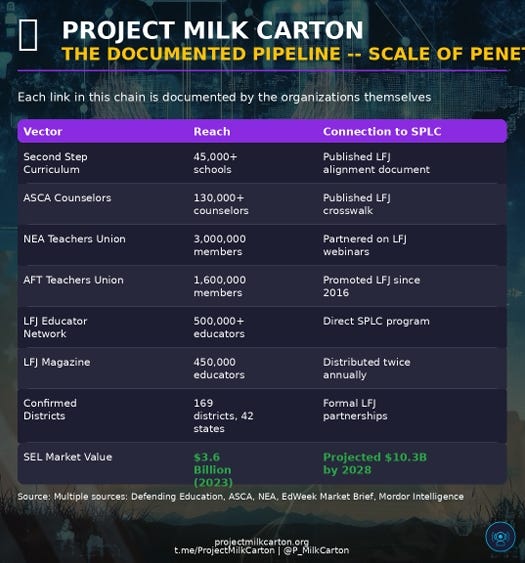
The research we have done describes this as a “documented institutional pipeline.”
And every part of that pipeline was published openly by the organizations involved
.
The Pipeline Mechanics
The research lays out the pipeline step-by-step:
ASCA sets counselor standards
Counselors follow ASCA guidance
ASCA maps standards to Learning for Justice
Learning for Justice is operated by the SPLC
Counselors influence SEL implementation
Second Step aligns directly to Learning for Justice
Schools adopt SEL systems already aligned to SPLC frameworks
That creates what researchers describe as a “self-reinforcing loop.”
Once districts adopt these systems:
teacher training aligns with them
counselor guidance reinforces them
curriculum standards normalize them
and future educators are trained within the same frameworks
That is how institutional influence spreads.
Not through one law.
Not through one politician.
But through interconnected systems.
The Scale of the Network
One of the most shocking parts of the report is the sheer scale involved.
According to the research:
45,000+ schools use Second Step
130,000+ counselors are influenced through ASCA
500,000+ educators are connected to Learning for Justice
NEA reaches roughly 3 million educators
AFT reaches roughly 1.6 million educators
That is not a small educational trend.
That is industrial-scale influence.
And once systems reach this size, they begin shaping national educational culture itself.
The Teachers Union Connection
The investigation also uncovered connections involving major teachers unions.
According to the report:
NEA partnered with Learning for Justice on webinars
AFT promoted Teaching Tolerance materials
SPLC executives were presented as educational experts
Combined, these unions influence more than 4.6 million educators nationwide.
That matters because unions play a major role in:
professional development
curriculum adoption
policy advocacy
and educational standards
Again, the issue is not whether people politically agree or disagree.
The issue is whether parents fully understood how interconnected these systems already were.
The CASEL Connection
Then there is CASEL.
CASEL — the Collaborative for Academic, Social, and Emotional Learning — is one of the most influential SEL organizations in America.
CASEL awarded Second Step its highest “SELect” endorsement.
The research describes this as a “circular validation loop”:
CASEL endorses Second Step
Second Step aligns with Learning for Justice
Learning for Justice is operated by SPLC
Schools trust CASEL
Schools adopt Second Step
SPLC-aligned frameworks enter classrooms
This matters because most districts rely heavily on CASEL endorsements when selecting SEL programs.
That gives enormous influence to organizations shaping those endorsement systems.
The 169 School Districts
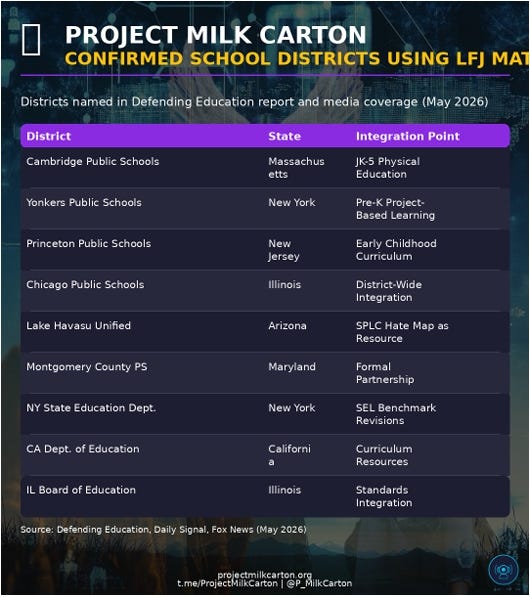
By 2026, investigative reporting found at least 169 school districts across 42 states had Learning for Justice materials embedded in curriculum systems.
And researchers argue that number is likely much higher.
Some examples included:
Cambridge Public Schools
Chicago Public Schools
Princeton Public Schools
California Department of Education
New York State Education Department
This demonstrates the framework was not isolated to a few districts.
It had spread nationally.
The Bigger Issue: Transparency
At this point, many readers may ask:
“Why does any of this matter?”
The answer is simple:
Transparency.
Whether someone supports or opposes these frameworks politically, parents deserve to know:
what their children are being taught
who created the standards
how those systems spread
and what ideological frameworks are connected to them
That is not extremism.
That is basic democratic accountability.
Because education is one of the most powerful systems in society.
Whoever shapes educational frameworks influences how future generations understand:
identity
justice
politics
power
activism
citizenship
and society itself
That influence matters.
The SEL Trojan Horse Argument
One of the strongest claims made in the report is this:
The term “SEL” functioned as a Trojan horse.
Parents heard:
kindness
empathy
anti-bullying
emotional support
But embedded within those systems were:
power analysis frameworks
activist standards
social justice models
and institutional ideology pipelines
Supporters strongly disagree with this characterization.
They argue SEL helps students become emotionally healthy and socially aware.
But the alignment documents undeniably prove one thing:
The integration between SEL and Learning for Justice was real, intentional, and documented.
That fact alone changes the national conversation.
Why Parents Feel Blindsided
A major reason this issue exploded publicly is because many parents feel they were never informed.
Most families never saw:
the alignment documents
the counselor crosswalks
the institutional partnerships
or the ideological framework language
They simply heard:
“Social-Emotional Learning.”
That branding matters.
Because names shape perception.
And many parents now argue the label “SEL” concealed a much broader ideological structure operating underneath it.
Whether one agrees with that criticism or not, the frustration itself is real.
Because trust breaks down when communities feel information was hidden from them.
The Financial Incentive
Another important piece of this story is money.
The research estimates:
the SEL market was worth roughly $3.6 billion in 2023
and could grow to $10.3 billion by 2028
That is an enormous industry.
And large industries create powerful incentives:
curriculum sales
software contracts
teacher training
counselor certifications
conference partnerships
grant funding
consulting services
Once systems become financially dependent on these frameworks, they become extremely difficult to unwind.
That is why this investigation matters now.
Because the public is only beginning to understand how large these systems became.
The Smoking Gun
At the end of the day, this entire article comes back to one central fact:
The alignment was documented.
Not guessed.
Not theorized.
Published.
The Committee for Children openly instructed schools to integrate SPLC Learning for Justice materials into SEL implementation.
ASCA mapped counselor standards directly to the same framework.
Teachers unions promoted the systems.
CASEL endorsed the curriculum.
And the network spread nationwide through schools, counselors, districts, and educational partnerships.
That is why these documents matter so much.
Because once the paperwork became public, the argument changed from:
“Is this happening?”
To:
“How long has this been happening?”
What Comes Next
In Part 3 of this investigation, we will follow the financial pipeline itself.
We will examine:
billionaire foundations
donor-advised funds
nonprofit pass-through organizations
and the money networks helping fuel the explosive growth of SEL systems nationwide.
Because influence does not spread on ideology alone.
It spreads through money.
And once we follow the funding pipeline, the scale of the network becomes even larger than most Americans realize.
Because informed communities protect children.Conclusion
The documents in this investigation matter because they remove the guesswork.
For years, parents, teachers, and community members were told there was no direct connection between Social-Emotional Learning programs and larger ideological frameworks connected to organizations like the SPLC.
But the alignment documents tell a different story.
Not leaked documents.
Not anonymous claims.
Not conspiracy theories.
Published alignment charts, counselor crosswalks, institutional partnerships, and curriculum recommendations created by the organizations themselves.
Whether people agree or disagree politically, every parent should be able to ask honest questions about what is entering classrooms, who created these standards, and how these systems spread into schools nationwide.
Transparency should never be controversial.
At Project Milk Carton, our goal is not fear. Our goal is awareness, accountability, and public understanding. We believe informed communities make better decisions, ask better questions, and become stronger advocates for children and families.
And this investigation is only beginning.
In Part 3, we will begin following the funding pipeline behind these systems — including billionaire foundations, nonprofit pass-through networks, donor-advised funds, and the financial engine helping drive SEL expansion across America.
If you found this investigation valuable, educational, or thought-provoking, please consider supporting our work by becoming a paid subscriber to The Constitutional Republic on Substack.
Every subscription helps us continue:
Investigative reporting
Public records research
Educational resources
Community outreach
Transparency projects
And future investigations like this series
Most importantly, please share this article.
Independent journalism survives when communities help spread information that powerful institutions would rather keep ignored, buried, or misunderstood.
Because silence protects systems.
Informed communities protect children.
SOURCES
1. Committee for Children, "Second Step Digital K-12: Learning for Justice Alignment," 2021, Doc #1813.
2. ASCA, "Student Standards Crosswalk with Learning for Justice Social Justice Standards."
3. SPLC, "Social Justice Standards: A Framework for Anti-bias Education."
4. ProPublica Nonprofit Explorer, IRS Form 990 filings (EIN 91-1188127).
5. Tyler O'Neil, "How the SPLC's Woke Ideology Infected 169 School Districts," Daily Signal, 5/12/2026.
6. Fox News, "SPLC curriculum found in classrooms as early as kindergarten," 5/12/2026.
7. PJ Media, "42 States Are Using Disgraced SPLC's K-12 Educational Materials," 5/13/2026.
8. Courage Is A Habit, "Violation: American School Counselor Association," 10/2/2025.
9. Courage Is A Habit, "ASCA Direct Ties to Radical SPLC," 10/14/2025.
10. Family Research Council, "The SPLC's Radical Learning for Justice Program," 2021.
11. InfluenceWatch, "Learning for Justice" organizational profile.
12. EdWeek Market Brief, "Second Step Leads the Pack," 2020.
13. Mordor Intelligence, "Social and Emotional Learning Market Analysis."
14. CASEL Program Guide, "Second Step Elementary."
15. RedState, "Critics Sound Alarm Over SPLC-Linked Curriculum," 5/13/2026.
© 2026 Project Milk Carton | 501(c)(3) | EIN: 33-1323547